Pink Salt Science: Facts, Traditions, and Clinical Realities
An honest, medically grounded guide to culinary pink rock salt from the Khewra Salt Range. We believe in absolute transparency: distinguishing verifiable mineralogy and culinary quality from unproven wellness myths.
Essential Health Notice & Medical Disclaimer
Himalayan pink salt does not treat, cure, mitigate, or prevent any medical condition or disease. Pink salt is predominantly sodium chloride (~98%). Like any dietary salt, it must be consumed in strict moderation. We strongly advise individuals with hypertension, kidney disease, cardiovascular disease, diabetes, or respiratory conditions to consult a qualified healthcare professional (such as a licensed physician or registered dietitian) before making changes to their diet or sodium consumption.
Do not inhale salt aerosols, use salt inhalers, or replace prescribed clinical therapies (such as asthma inhalers, insulin, or blood pressure medication) with salt products.
What is Himalayan Pink Salt Actually Made Of?
Geologically extracted from the ancient halite seams of the Salt Range in Punjab, Pakistan (such as the Khewra and Warcha deposits), pink salt is an unrefined mineral crystal deposited over 250 million years ago during the evaporation of the ancient Tethys Sea.
From a chemical standpoint, pink salt is approximately 98% sodium chloride (NaCl). The remaining 1.5% to 2% consists of naturally occurring crystalline trace minerals, predominantly iron oxide (which imparts its distinctive rose-pink and amber coloration), along with tiny traces of calcium, potassium, magnesium, and sulfur.
Trace Minerals at Standard Dietary Serving Sizes:
Because pink salt is ~98% sodium chloride, a normal culinary serving (1/4 teaspoon or ~1.5g) provides negligible, sub-therapeutic quantities of potassium (<5 mg, or <0.2% of Daily Value) and magnesium (<2 mg, or <0.5% DV). Consuming enough pink salt to satisfy your daily dietary requirement for potassium or calcium would require consuming lethal amounts of sodium.
Nutritional Composition Breakdown (Per 5g / 1 tsp)
Sources: USDA FoodData Central & Food Standards Australia New Zealand (FSANZ) Laboratory Assays. Checked: October 2026.
Sensible Sodium Guidance: Daily Limits & Cardiovascular Health
All dietary sodium—whether sourced from fine table salt, sea salt, or pink Himalayan rock salt—exerts the same physiological osmolarity in the human bloodstream. Consuming excessive sodium raises arterial fluid volume and increases systemic blood pressure.
World Health Organization
Equivalent to less than 5 grams of salt per day (approx. 1 level teaspoon total across all dietary sources).
Source: WHO Sodium Intake Guidelines. Checked: Oct 2026.
American Heart Association
Recommends an upper limit of 2,300 mg/day, with an ideal target of 1,500 mg/day for adults with hypertension or cardiovascular risk.
Source: AHA Dietary Sodium Consensus. Checked: Oct 2026.
Why Choose Pink Salt?
Pink salt is prized for its crisp crystalline texture, subtle earthy minerality, absence of microplastics, and freedom from chemical anti-caking additives.
A gourmet culinary choice, not a medical supplement.
Distinguishing Verified Facts from Popular Claims
We evaluate the most common claims surrounding pink salt using peer-reviewed medical and scientific literature.
Established Facts
Verifiable chemical, physical, and nutritional characteristics confirmed by laboratory science.
- Natural Unrefined Halite:
Mined directly from underground rock beds as raw mineral crystals without anti-caking additives.
- Essential Electrolytes:
Sodium and chloride are essential for human nervous system function, muscle contraction, and fluid balance (identical to table salt).
- Gourmet Culinary Performance:
Coarse crystal flakes provide superior textural crunch, delicate salinity, and aesthetic presentation for gourmet finishing.
Traditional Uses
Historical folk customs and cultural practices passed down through regional traditions.
- Ayurvedic Heritage (Sendha Namak):
Historically revered in South Asian culinary traditions as a cooling rock salt used during religious fasts (vrats) and digestive tonics.
- Warm Saline Gargles:
Warm saltwater gargles provide osmotic relief for mild, transient throat discomfort by reducing localized mucosal swelling.
- Relaxing Mineral Baths:
Soaking in warm salt baths offers comforting relaxation and skin hydration, though systemic transdermal mineral absorption is unproven.
Unproven Claims
Marketing claims lacking clinical trials or refuted by peer-reviewed medical consensus.
- Asthma & Halotherapy Cures:
Salt rooms and salt inhalers do not cure or reverse asthma, COPD, or respiratory illness (see clinical breakdown below).
- Diabetes & Blood Sugar Control:
Sodium chloride does not lower glucose or enhance insulin. High sodium intake worsens diabetic kidney and heart risks.
- "Body Detox" & "pH Balancing":
Blood pH is tightly regulated (7.35–7.45) by lungs and kidneys. Dietary salt cannot and does not alter systemic blood pH.
Clinical Scrutiny: Asthma, Respiratory Health, and Diabetes
Internet marketing often targets vulnerable patients by claiming that pink salt can treat chronic medical conditions. Below is what medical trials and clinical specialty organizations actually state.
1. Asthma & Respiratory Inhalation (Halotherapy)
The Claim: Visiting salt caves (speleotherapy), sitting near salt lamps, or inhaling dry salt aerosols clears the lungs, treats asthma, and replaces bronchodilators or steroid inhalers.
The Clinical Evidence: The Cochrane Database of Systematic Reviews conducted exhaustive meta-analyses on speleotherapy and halotherapy for asthma. The reviewers concluded that available studies are small, methodologically flawed, and fail to demonstrate reliable clinical benefit over placebo. The American Thoracic Society (ATS) and the Global Initiative for Asthma (GINA) do not recommend halotherapy for asthma management.
Citations: Beamon et al., Cochrane Airways Group; ATS Complementary Therapy Review. Checked: October 2026.
2. Diabetes & Metabolic Blood Sugar Claims
The Claim: Drinking pink salt sole (saturated salt water) or eating pink salt balances blood sugar, boosts insulin sensitivity, and prevents diabetic complications.
The Clinical Evidence: There is zero biochemical evidence that sodium chloride or trace mineral impurities enhance pancreatic beta-cell function, improve cellular insulin receptor binding, or lower glycated hemoglobin (HbA1c). Glucose transport is governed by insulin signaling and GLUT-4 transporters, which are unaffected by pink salt.
Citations: ADA Standards of Care in Diabetes: Cardiovascular & Renal Risk Management. Checked: October 2026.
Pink Salt in Bath Water: Relaxing Soaks vs. Marketing Claims
Soaking in warm water infused with pink salt crystals is an enjoyable, centuries-old relaxation ritual. To help you enjoy bath salts safely and intelligently, we distinguish dermatological facts from common marketing myths found on internet graphics.

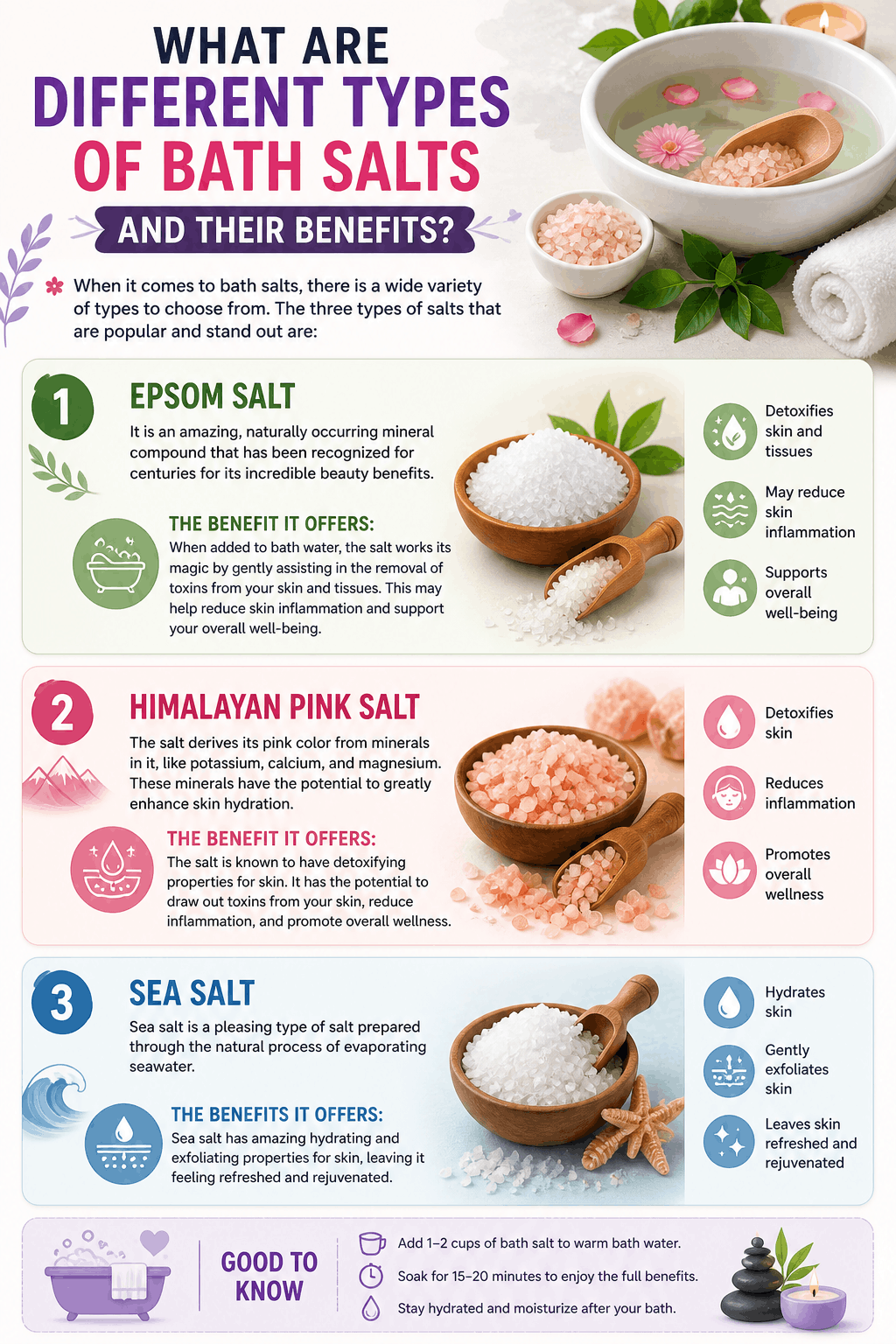
Supplied bath salt guide graphic analyzed below for consumer clarity and clinical accuracy.
- Hydrotherapy & Thermal Muscle Relief: Immersing your body in comfortably warm water (37°C to 39°C or 98°F to 102°F) causes peripheral blood vessels to dilate (vasodilation), improving blood flow to tired muscle groups and easing physical stiffness after long hours of work or exercise.
- Gentle Physical Exfoliation: Dissolving coarse pink salt in warm water softens rough skin patches. When used gently with a washcloth or scrub, the mineral granules help slough away dead stratum corneum cells, leaving skin feeling soft and smooth.
- Stress Reduction & Sleep Preparation: Taking a warm evening bath helps lower central core body temperature after you step out, which naturally signals your body to prepare for restorative sleep.
The human skin is a semi-impermeable protective shield designed to keep pathogens out and fluids in. Skin does not excrete metabolic toxins. Your liver and kidneys are the only organs that neutralize and excrete bodily toxins. Soaking in salt water cannot "pull toxins" through your dermal pores.
Pink salt does not possess pharmaceutical anti-inflammatory properties and does not cure eczema, psoriasis, dermatitis, or arthritis. In fact, soaking in hypertonic salt water if your skin is cracked, raw, or bleeding can cause painful burning and acute contact irritation.
Enjoy pink bath salt for relaxing self-care, aromatherapy, and surface cleansing, but never substitute a bath soak for professional dermatological treatment or medical care.
Step-by-Step Bath Guide ("Good to Know"):
Safety Warning: People with cardiovascular conditions, low blood pressure, pregnancy, or open wounds should consult their doctor before taking hot mineral baths.
Food-Safety, Labeling & Import Certification Requirements
Importing and selling edible pink salt and bath products requires strict adherence to statutory food-safety, labeling, and facility regulations in each destination market. Below is our verified statutory compliance index, grounded in official regulatory statutes verified in October 2026.
- Facility Registration: Foreign food facilities must be registered with the FDA under section 415 of the FD&C Act (21 CFR Part 1, Subpart H) before commercial dispatch.
- FSVP Compliance: US importers must have a Foreign Supplier Verification Program (21 CFR Part 1, Subpart L) verifying hazard analysis and preventative food-safety controls.
- Mandatory Non-Iodized Statement: Under 21 CFR 100.155, retail salt that does not contain added potassium iodide must conspicuously state on the principal display panel: "This salt does not supply iodide, a necessary nutrient."
- Nutrition Labeling: Must bear a standard FDA Nutrition Facts panel (21 CFR 101.9) with dual unit metric and avoirdupois ounces net weight declarations.
Official Source: US FDA Title 21 Code of Federal Regulations
Date Checked: October 2026
- Food Information to Consumers: Complies with Regulation (EU) No 1169/2011 (FIC) and UK Food Information Regulations 2014: statement of identity, net quantity in metric grams/kg, and batch/lot coding.
- Responsible Food Business Operator: Must state the name and address of an EU-established or UK-established Food Business Operator (FBO) responsible for consumer food information.
- Food Contact Packaging: Plastic pouches and glass bottle seals must comply with Regulation (EC) No 1935/2004 for materials intended to come into contact with food.
- Cosmetic Bath Salts: Bath salts sold in the EU/UK must comply with EU Cosmetic Regulation (EC) No 1223/2009, including a Cosmetic Product Safety Report (CPSR) and CPNP notification.
Official Source: EUR-Lex Official Journal of the EU & UK FSA Regulations
Date Checked: October 2026
- Safe Food for Canadians: Canadian commercial importers must hold a valid SFC license issued by the Canadian Food Inspection Agency (CFIA).
- Mandatory Bilingual Labeling: All mandatory information (common name, ingredients, net quantity, manufacturer) must appear in both official languages (English and French).
- Division 17 Table Salt Standard: Food and Drug Regulations (FDR) require non-iodized retail salt to declare non-iodization on principal display panels.
- Canadian Nutrition Facts Table: Must follow Canadian NFT formatting, serving sizes, and percent daily value calculations.
Official Source: CFIA Industry Labelling Tool & Health Canada FDR
Date Checked: October 2026
- Gulf Standard for Edible Salt: Complies with GSO 1843/2016 for Table Salt, specifying mineral purity, heavy metal maximum limits, and moisture thresholds.
- Mandatory Arabic Language Labeling: Pre-packaged consumer foods must feature Arabic language product identity, weight, country of origin, and production/expiry dates.
- SFDA SABER System: Importers into Saudi Arabia must register products and obtain Shipment Certificates of Conformity (SCoC) via the SABER electronic portal.
- Facility Halal Assurance: Verification of cross-contamination prevention and clean processing for packaging plants.
Official Source: GSO Standardization Organization & SFDA Regulations
Date Checked: October 2026
- Pakistan Edible Salt Standard: Mined and graded in accordance with PS:166/2008 specifications for edible rock salt (min 97% NaCl, food safety limits).
- Quarry Authorization: Sourced under legitimate mining concessions monitored by the Pakistan Mineral Development Corporation (PMDC).
- Phytosanitary Export Clearance: Timber crating and export pallets must undergo ISPM-15 heat-treatment and fumigation certified by the Department of Plant Protection (DPP).
Official Source: PSQCA Standards Directory & TDAP Export Guidelines
Date Checked: October 2026
Regulatory requirements strictly depend on whether pink salt is shipped as an edible food product (fine salt, grinder refills), a cosmetic product (bath crystals, body scrubs), or an electrical homeware appliance (carved ambient lamps).
• Food-Grade: Requires food facility registration, nutritional labeling, and FDA/EFSA food-contact barrier packaging.
• Bath & Spa: Regulated as cosmetics; exempt from nutrition facts, but requires ingredient lists and safety assessments.
• Lamps & Monuments: Regulated as electrical appliances (lighting and cord assembly) and crated freight.
Strict Policy on Business Certifications
In accordance with our strict ethics and truth-in-advertising charter, we do not download, copy, edit, or display certificates belonging to other companies, and we never create or imply that our business holds a certification it has not earned. We display only verified certifications issued directly to Khewra Artisan Pink Salt Co. under its registered business name.
Compliance Status & Missing Business Details Required for Full Commercial Registration:
While our products are mined from authentic PMDC-supervised Khewra seams and crated on ISPM-15 certified timber, the following specific business details and third-party audit certificates must be filed or completed under the business name Khewra Artisan Pink Salt Co. prior to direct commercial retail distribution in respective foreign territories:
Status: Pending registration by business owner. Requires formal designation of a US Agent for FSVP compliance prior to commercial food shipments.
Status: Pending appointment of an established EU/UK legal representative entity to appear on retail packaging labels.
Status: Pending formal facility audit issued directly in the name of Khewra Artisan Pink Salt Co. for the Quaidabad/Jhelum packaging center.
Status: Pending license number under Pakistan Standard PS:166/2008 for retail pre-packaged consumer edible salt.
By transparently reporting these requirements rather than displaying forged or borrowed third-party certificates, we protect our clients and maintain uncompromising legal and commercial integrity.
Scientific & Medical Reference Index
All statements on this page are grounded in peer-reviewed clinical research and official public health guidelines verified in October 2026:
World Health Organization (WHO)
Guideline: Sodium intake for adults and children. Recommends <2,000 mg sodium (<5 g salt) per day to reduce blood pressure and risk of cardiovascular disease.
Verified: October 2026American Heart Association (AHA)
Sodium and Salt: The Facts & Daily Limits. Explains that all culinary salts contain identical sodium content by weight and recommends an optimal target of 1,500 mg/day.
Verified: October 2026American Diabetes Association (ADA)
Standards of Medical Care in Diabetes: Cardiovascular Risk Management. Evaluates dietary sodium and advises strict limits to prevent hypertensive nephrosclerosis.
Verified: October 2026Cochrane Database of Systematic Reviews
Speleotherapy for chronic asthma. Cochrane Airways Group meta-analysis showing lack of high-quality randomized evidence supporting salt room or salt inhalation therapy.
Verified: October 2026Food Standards Australia New Zealand (FSANZ)
Analytical Investigation into the Mineral Content of Specialty Pink Salts. Confirms ~98% NaCl content and demonstrates that trace minerals are negligible at standard serving sizes.
Verified: October 2026USDA FoodData Central
Himalayan Pink Rock Salt Mineral Profile (SR Legacy). Comprehensive elemental quantification of sodium, potassium, calcium, magnesium, and iron in crystalline halite.
Verified: October 2026Have Questions About Salt Sourcing or Purity?
Review our authentic Khewra mine provenance or consult our direct artisan workshop team.